Will Love: A Designer’s Real-World Review
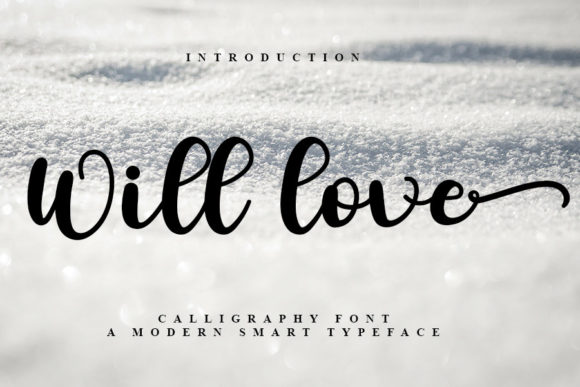
First impression? Will Love feels like a confident whisper—not loud, but impossible to ignore. It’s a script font with quiet authority: smooth but not slavish, elegant but never fussy. The letterforms have a gentle rhythm—no abrupt spikes or overwrought flourishes—just thoughtful curves, balanced contrast, and a subtle bounce in the baseline that suggests warmth without sacrificing polish. This isn’t a “wedding-only” script or a “trendy-but-fragile” display font. Will Love carries itself like a well-tailored jacket: relaxed enough for creative brands, sharp enough for premium positioning.
Where It Lives—and Where It Thrives
In logo design, Will Love shines when paired with intention. I used it recently for a small-batch ceramic studio—paired with a clean, low-contrast sans serif for body text—and the combination landed perfectly: artisanal but not twee, personal but professional. It works best as a brand mark or logotype, not a full-wordmark system. Think “Haven Co.” or “Lume Studio”, not “Haven Collective & Co.”. Its strength lies in brevity: two to four words max. Longer phrases lose clarity, especially at smaller sizes or on textured packaging.
For packaging design and product labels, Will Love delivers instant mood elevation. On matte-finish soap boxes or kraft-paper tea tags, it reads as intentional—not decorative filler. It performs especially well in premium packaging: think apothecary goods, boutique skincare, or small-batch preserves. The lowercase ‘a’, ‘g’, and ‘y’ have just enough character to feel handmade, while the uppercase forms hold structural integrity—critical when scaling for bottle embossing or foil stamping.
In editorial design and blog graphics, I reserve Will Love for pull quotes, section headers, or title treatments—not body copy. It’s not a workhorse; it’s a spotlight. Used this way, it adds tonal nuance without competing with readability. On social media graphics, it excels in square or vertical formats: Instagram story headers, Pinterest quote pins, or Etsy shop banners. Its natural flow guides the eye cleanly—even on mobile screens—when sized appropriately (minimum 48px for headlines, 36px for mid-size accents).
Where Caution Is Required
Will Love is not built for long-form readability. Don’t use it for website navigation, email subject lines under 20 characters, or body text in digital ads. Its connected script style demands breathing room—tight tracking kills its charm, and poor rendering on older devices can blur letter joins. It also doesn’t scale down gracefully: below 24px, the lowercase ‘e’ and ‘c’ begin to merge visually, and the delicate terminals vanish. Always test it in black and white first—some scripts rely on subtle gray tones or hinting tricks that fall apart in monotone print.
It’s also not a universal mood-setter. Will Love leans warm, human, and quietly refined—not bold, tech-forward, or minimalist. Pair it with a geometric sans serif (like Inter or Poppins) for contrast, not competition. Avoid pairing it with another script font unless you’re deliberately building layered hierarchy (e.g., Will Love for the brand name + a tighter handwritten font for a tagline). And skip serif pairings unless the serif is ultra-light and neutral—think a delicate Didot, not a heavy Garamond.
Real Testing Notes from My Workflow
- Mockup early, mockup often: I tested Will Love on real Cricut vinyl samples and Canva template exports—not just desktop previews. On glossy sticker stock, the fine hairlines held up; on uncoated cardstock, I increased stroke weight slightly in vector edits.
- Uppercase vs. lowercase matters: The all-caps version has more presence and works better for merchandise (think tote bags or enamel pins), while lowercase feels more intimate—ideal for invitations or newsletter headers.
- Spacing is forgiving—but not invisible: Default kerning is solid, but I still adjusted pairs like “To”, “We”, and “Love” manually in logo lockups. Never skip this step before final export.
- Licensing is non-negotiable: Will Love is a commercial font from Script Amp—confirm your license covers client deliverables, digital products, and printable design assets before pitching it to a brand owner. Some versions restrict web embedding or resale in templates.
How It Shapes Perception
Will Love affects audience trust indirectly but powerfully. When used with restraint, it signals care—not just in typography, but in brand voice. A coffee roaster using Will Love for their “Small Batch Reserve” label telegraphs craftsmanship and attention to detail. That perception transfers: customers assume the beans are sourced thoughtfully, the roast profile is intentional, the packaging is sustainable. It’s not magic—it’s consistency. Using Will Love across touchpoints (website header, Instagram bio, printed menu) builds recognition faster than a generic script ever could.
But misused, it undermines professionalism. Slapping it onto a B2B SaaS dashboard or a legal firm’s brochure reads as unserious—not playful. It’s a creative font, yes—but one rooted in modern typography discipline, not novelty. Its value lies in how precisely it narrows focus: it says, “This moment matters. This message is worth feeling.” That’s why it works so well in invitation design, wedding stationery, or boutique retail—contexts where emotional resonance is part of the product.
Final Verdict: Not for Every Project—But Essential for the Right One
Will Love isn’t a Swiss Army knife. It won’t replace your go-to sans serif or your trusted serif for body text. But as a display font—a deliberate, human-centered accent—it earns its place in my core design assets. It bridges the gap between handmade authenticity and polished execution, which is exactly what small business owners, crafters, and digital sellers need when building distinct brand identity without overcomplicating.
If you’re evaluating Will Love for client work, ask yourself: Does this project benefit from warmth, quiet confidence, and visual cohesion—not just decoration? If yes, test it beside your existing typeface stack. Try it in a real context: paste it into a Shopify banner mockup, print it on a sample label, drop it into a Canva template you actually sell. See how it holds up—not as a standalone specimen, but as part of a living system. That’s where Will Love proves itself: not in isolation, but in action.